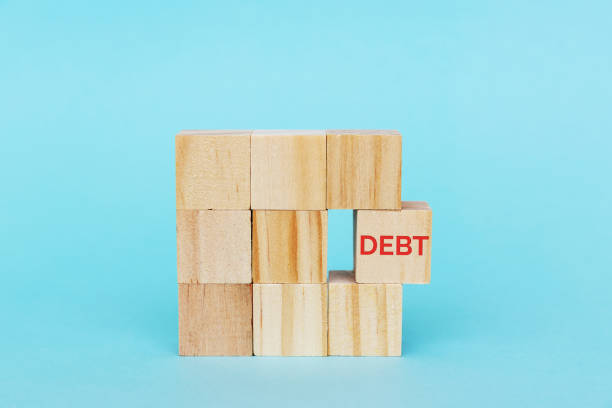


You know the feeling. You open your banking app, and there it is—the dreaded notification or the stark visual of a progress bar at its absolute limit. Your credit card is maxed out. It’s a source of low-level stress that hums in the background of your life, a nagging reminder that you’re living on the edge of your financial safety net.
When you’re working a full-time job and trying to have a life, the idea of untangling a mountain of high-interest debt can feel like a second job you didn’t apply for. Financial advisors who charge hundreds of dollars an hour will tell you to create complex spreadsheets and consolidate loans, but let’s be real: you don’t have the time, and you certainly don’t have the money to pay for that advice. You need a strategy that is simple, effective, and doesn’t require a degree in finance to understand.
Enter the “Domino Payment” method. It’s a hyper-focused, psychologically rewarding way to tackle maxed-out cards one by one, creating a chain reaction of financial wins that helps you build momentum and finally get your credit utilization under control.
The core problem with maxed-out cards is that they are expensive. When you hover at 90% to 100% of your credit limit, your credit score takes a hit, and you are likely paying a hefty interest rate on every purchase. The minimum payment on a maxed-out card is often calculated to keep you in debt indefinitely. If you have multiple cards in this state, paying the minimum on all of them is a trap. The Domino method is designed to break that trap.
To start, you need to get brutally honest about your numbers. List your cards, their balances, and their minimum payments. The first step is to ensure you are paying at least the minimum on every single card to avoid late fees and further damage to your credit report. That is non-negotiable. However, all of your extra money—any cash you can squeeze out of your budget by cooking at home, skipping the daily coffee run, or cancelling a streaming service—goes toward one specific card. Choose the card with the smallest balance, regardless of its interest rate. This is your first domino.
Why aim for the smallest balance? Because human beings are not robots. We need to see progress to stay motivated. Paying off a $500 balance is infinitely more satisfying and psychologically powerful than chipping away at a $5,000 balance for a year. Once that first card is paid off, that emotional win is your fuel. You have just cleared one source of stress.
Now, comes the “domino” effect. Take the entire amount you were paying on that first card—both the minimum payment and the extra money—and add it to the minimum payment of the next smallest card. This accelerates your progress. You are now “snowballing” your payments, but the “domino” analogy is more fitting for the immediate sense of toppling obstacles.
This is critical: do not close the paid-off card. Your credit score is partially based on your “credit utilization ratio”—the amount of credit you use compared to the total credit available to you. If you close a card you’ve paid off, you reduce your total available credit, which can make your remaining debt look even more maxed out, hurting your score. Instead, put that card somewhere safe. Better yet, use it for one small, recurring subscription and pay it off automatically every month to keep the account active and show a positive payment history.
While you’re executing this domino strategy, you must also address the spending that got you here. A maxed-out card is a symptom of a mismatch between income and spending. You don’t need to be perfect, but you do need to be conscious. Use cash or your debit card for variable expenses like groceries and gas. When your credit card balance hits zero, you need to give it a moment to breathe. For the first few months of your recovery, treat your credit card like a debit card: if the money isn’t in your checking account, the purchase doesn’t happen. You have to break the cycle of using future income to pay for present desires.
Finally, don’t wait for a hero to save you. The credit card companies are not on your side. Their business model is built on your debt. You are the only person who can topple these financial dominoes. This method isn’t about finding a magic loophole; it’s about taking control, using behavioral psychology to your advantage, and making a series of small, manageable decisions that add up to a massive change.
The goal is not just to get out of debt, but to stay out. Once you clear that final card, you’ll have the proof you need: you are capable of managing your money, you have the discipline to say no, and your credit score can be a tool that works for you, not a warning sign that follows you around. The work starts today. Pick your first domino.